
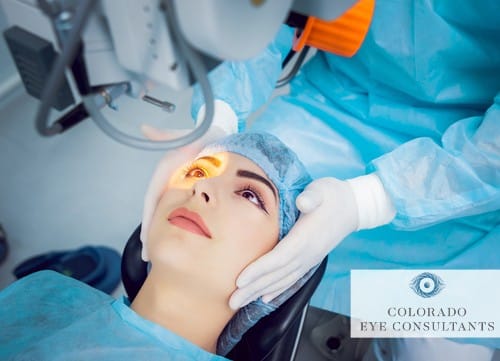
If you’ve been thinking about LASIK, you may have questions about the experience itself. What does the surgeon actually do? Will there be any discomfort? How long does it take? These are completely reasonable things to want to know before scheduling a procedure.
Keep reading for a clear, step-by-step look at what happens during LASIK so you can walk through the door at Colorado Eye Consultants feeling prepared.
Preparing Your Eyes for the LASIK Procedure
Before any laser work begins, your LASIK surgeon will place numbing drops in your eyes. These drops take effect quickly, so there is no need for general anesthesia or sedation.
Once your eyes are numb, a small eyelid holder is placed to keep them open throughout the procedure. You won’t need to worry about blinking at the wrong moment. A suction ring is also placed on the eyes to hold them steady and in the correct position.
You may feel gentle pressure at this point, but not pain. Once everything is in place, your LASIK surgeon is ready to begin.
The LASIK Procedure, Step by Step
Creating the Corneal Flap
The first step in LASIK involves creating a thin flap on the surface of your cornea. Your eye surgeon uses a femtosecond laser to create this flap with high precision. Once created, the flap is gently folded back to expose the underlying corneal tissue.
Reshaping the Cornea
With the cornea exposed, an excimer laser reshapes the underlying tissue according to your individual prescription. This step corrects refractive errors such as nearsightedness, farsightedness, and astigmatism by adjusting how your cornea refracts light.
During this part of the procedure, you’ll be asked to focus on a small target light. The laser itself takes only seconds to complete its work.
Repositioning the Flap
Once the corneal reshaping is complete, the flap is returned to its original position. It begins bonding naturally right away, with no stitches or sutures required. The full LASIK procedure typically takes around 15 to 20 minutes from start to finish.
What to Expect During LASIK Recovery
Many patients notice an improvement in their vision almost immediately after the procedure, though some describe their sight as slightly hazy at first. Before you leave, your eye surgeon will provide lubricating, antibiotic, and anti-inflammatory eye drops and place a protective shield over your eyes to prevent any accidental rubbing or bumping during the first night.
You will not be able to drive yourself home, so plan to have someone with you on the day of your procedure. Most patients return for a follow-up appointment the next day, where your LASIK surgeon will check your vision and confirm that your eyes are healing as expected. Many people feel well enough to return to work within one to two days.
For the first week, it is normal to experience mild symptoms such as dryness, light sensitivity, or a slight scratchy sensation. Artificial tears and the prescribed eye drops your LASIK surgeon provides will help manage this. Avoid rubbing your eyes during this period, as the corneal flap is still in the early stages of healing.
Most patients reach their best vision within a few weeks, though the full healing process can take up to three months. By six months post-procedure, most side effects have resolved, and patients are enjoying clear, stable vision without the need for glasses or contacts.
See What LASIK Can Do for You
Are you curious about LASIK or wondering whether the procedure could be right for you? To find out if you are a good candidate, schedule a consultation at Colorado Eye Consultants in Littleton, CO, today!